
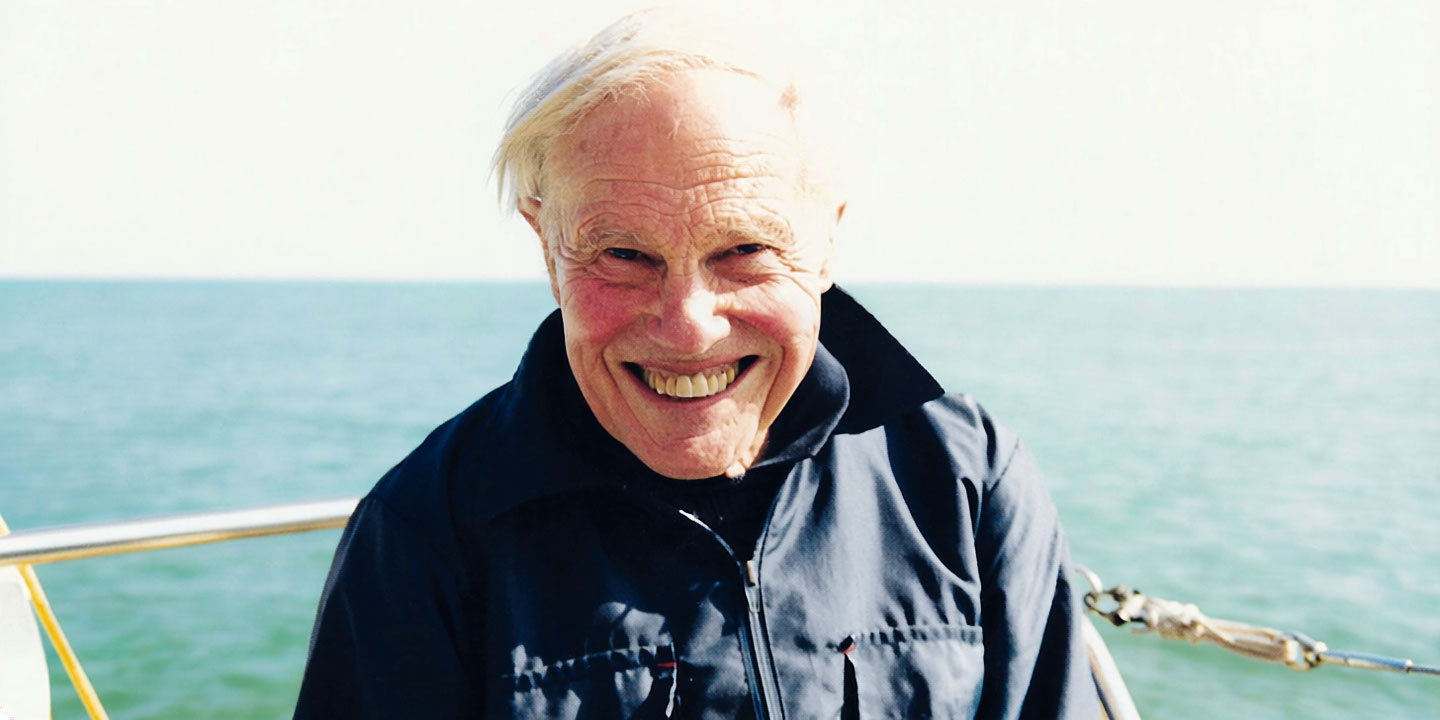
How a legacy gift from pioneering Cambridge alumnus Dr Robert Perrin is enthusing the next generations of materials scientists.
After all, what young person wouldn’t be intrigued by a field that can boast innovations such as ‘invisibility’ cloaks made from metamaterials, or ‘phase-change materials’ like temperature-regulated fabrics, or ballistic vests made from carbon nanotubes?

Advancements in materials science are shaping the future of technology and industry. Each discovery opens new possibilities and solutions to complex challenges, while many once-undreamed-of innovations are now integral parts of industries like transportation and infrastructure, energy, and medicine.
Materials science is the interdisciplinary study (combining principles from physics, chemistry and engineering) of the structure, properties, and performance of substances to design and develop new materials such as graphene, 3-D printing and biodegradable plastics.
The field evolved from metallurgy, ceramics, and mineralogy, gaining recognition as a distinct discipline in the 1940s. Just as historical eras like the Stone Age, Bronze Age, and Iron Age reflect the dominant materials of their time, today, materials science continues to shape technology, industry, and society by providing the foundation for innovation and sustainable solutions.
And the late Robert Perrin (King’s 1948) was one of its pioneers and keenest champions.
Strange bedfellows: soil and agriculture meet body armour and brass-making
Robert was one of the scientists responsible for the inception of the Clay Minerals Group of the Mineralogical Society of Great Britain and Ireland in 1948. He was based at the University of Cambridge, where he earned a BA and MA in Chemistry, followed by his PhD in the Department of Agriculture. He was an innovator and teacher in pedology, the scientific study of soils, setting up a leading research and teaching laboratory initially in Cambridge’s Department of Agriculture and then in the Department of Applied Biology. Thanks to Robert, the geological importance of clays and clay minerals of the British Isles gained a foothold and legitimacy in the University.
Robert’s contribution to the study and teaching of soils, their clay mineralogy and their interplay with engineering and material science derived partly from his experience in the Royal Artillery during World War II. As a commissioned officer, he soon became aware that aspects of soil, its stability, water supplies and the use of aerial photography for soil mapping were all very important considerations in ground warfare.
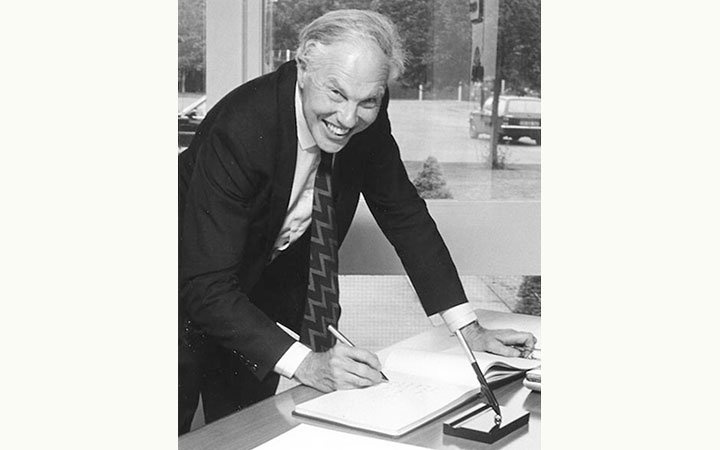
Robert ‘Bob’ Perrin visiting the Royal Electrical and Mechanical Engineers during his year as Master of the Armourers and Brasiers (June 1985–1986).
In 1985, as Master of the Worshipful Company of Armourers and Brasiers, one of the City of London’s ancient Livery Companies, Robert turned a longstanding membership and association with this artisan guild, founded in 1322, into an inspired transformation in the Company’s role and purpose. In his own words:
“In February 1986 I chaired a meeting of members of the Company with delegates from universities and industry to determine how the Armourers might best give support to metallurgy. This led to the establishment of the Metals Committee... and our policy of giving support, first in metals and then materials science as a whole, to successive levels of education and attainment from primary schools up to the Royal Society Medal.”
Robert’s contribution was rewarded with the Honorary Fellowship of the Institute of Materials, Minerals and Mining (Hon. FIMM), and the Institute now gives a Robert Perrin Award annually.
He certainly had an instinct for the future of his field and the scholarship of tomorrow: Robert not only left a bequest to King’s but was in touch directly with the Materials Science Department in 2017 to advise them that he had established a legacy to support outreach. Upon his death in 2023, £300,000 for this purpose was directed to the Department.
The stuff of science fiction reveals itself as science fact
Robert’s legacy gift is hugely significant to the Department, providing the means to engage more widely and promote an awareness of materials science and science generally, one of the Department’s top aspirations. In line with Robert’s wishes, the funds are primarily being used to support activities that focus on school-aged children, inspiring the next generation.
A shortage of funding in the state education sector means limited opportunities for children to gain experience of different working environments, which is especially true of primary-aged children, whose learning is mostly based in a single classroom. Yet it’s those early-age experiences that can have a profound influence on a child’s direction and engagement with subjects in later years, so a visit to a science laboratory within a university has the potential for a marked impact.
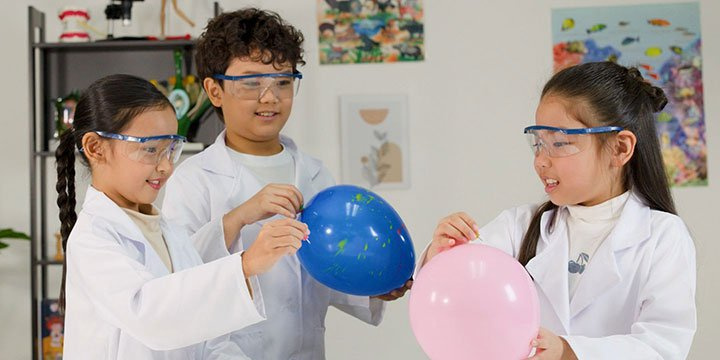 Image: blueringmedia
In 2025 to 2026, funds from the Robert Perrin legacy have been used to support the delivery of six interactive workshops for school children in KS2 and KS3, coordinated by the University as part of the Cambridge Festival and involving 188 children from several different schools.
Participation included attendees from a specialist school for children with autism, along with children being home-educated. Engaging with this last group is particularly important as they typically have few opportunities to experience the laboratory environments or work in groups with other children.
Within these fully interactive sessions in a teaching laboratory, children undertake three different experiments, all of which highlight in a simple and visual way how the properties of a material can be dramatically altered by temperature. The hands-on experience is direct, exciting, and unquestionably maximises the impact: feedback during the events has been fantastic, with the children amazed by what they see and the experience of scientific discovery.
And schools have been back for repeat visits, which speaks for itself.
Professor Nick Jones, Department of Materials Science and Metallurgy, reflected:
“We are immensely grateful for the generosity of Robert Perrin, whose legacy has had a transformative impact on our outreach work in the Department of Materials Science and Metallurgy. This support has enabled us to engage with a far wider and more diverse group of young people, providing hands-on scientific experiences that would otherwise be out of reach for many. By helping us inspire curiosity and enthusiasm in the next generation, this legacy is playing a vital role in shaping the future of materials science and widening participation in science more broadly.”
Nicky Davies, Robert’s daughter, remembered a hands-on father who made childhood special in unique ways:
"Curiosity and enthusiasm were attributes that Dad himself possessed right up to the end of his life. Growing up, my brother and I were the beneficiaries of this in many ways. Dad set up a mini laboratory for us at home, and I have never forgotten the magic of those early experiments making copper sulphate crystals"
Her brother, Chris Perrin, added:
"Dad always felt that he had been fortunate in life, and he wanted to help others experience the opportunities he had enjoyed. "Perrin Days" do just that, and they are a wonderful way for our father's memory to live on".
The future is coming... and it’s made from novel materials
Building on this success and the experience gained, for 2026 to 2027 the Department is initiating a scheme where groups of KS2 pupils from local primary schools will be invited to participate in hour-long interactive workshops in the Department. At the heart of this scheme is the fact that all the transport costs are being met from the Perrin legacy, thereby bypassing one of the major challenges for schools’ engagement.
Once fully established, these ‘Perrin Days’ will enable the Department to welcome more than 500 children a year, in addition to those engaged through other public events.
From the development of sustainable energy systems and advanced medical technologies to the creation of next-generation electronics, the future is being forged from these new materials. The ongoing pursuit of novel materials properties and synthesis techniques will continue to drive a revolution, with collaborative R&D and sophisticated laboratory analysis at the heart of every new discovery.
Will the next breakthrough in materials science and metallurgy come from a ‘Perrin Days’ alumnus or alumna? Only time will tell, but Robert’s thoughtful legacy has laid the groundwork for tomorrow’s young scholars.
Help shape the future with a legacy gift: get in touch
How do you picture the future of your own profession, field, or passion? Would you like to introduce the next generation to what you love?
For more information, contact: