
Physical Sciences at Alumni Festival

Here is a summary of the Physical Sciences activities taking place over the 2026 Alumni Festival weekend
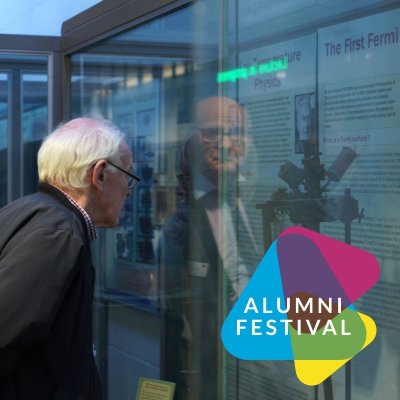
A guided tour of the Cavendish Museum - SOLD OUT
Friday 18 September
Ray Dolby Centre, JJ Thomson Avenue, Cambridge CB3 0US
Join an exclusive tour of the Cavendish Museum housed in the Ray Dolby Centre (RDC), the new state of the art facility and centrepiece of the Cavendish Laboratory, Department of Physics, at the University of Cambridge.
During the tour you will be guided through the redesigned Cavendish Museum, a new exhibition of scientific objects, archival imagery, and untold stories, tracing the Laboratory’s legacy from its founding 150 years ago to the present day.
Book your place for 10am
Book your place for 12pm
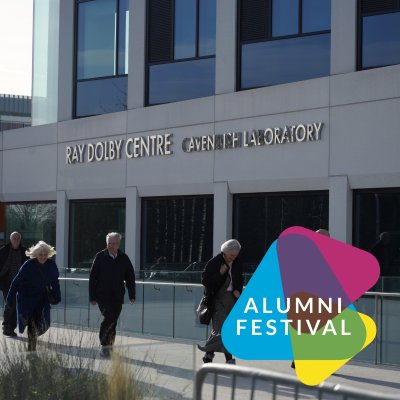
Ray Dolby Centre: A behind-the-scenes tour of the new home of the Cavendish Laboratory - SOLD OUT
Friday 18 September
Ray Dolby Centre, JJ Thomson Avenue, Cambridge CB3 0US
Join an exclusive tour of the Ray Dolby Centre (RDC), the new state of the art facility and centrepiece of the Cavendish Laboratory, Department of Physics, at the University of Cambridge.
For over 150 years, the Cavendish Laboratory has been at the forefront of scientific discovery, such as the electron, the neutron, the structure of DNA, and pulsars, and is home to 36 Nobel prize winners.
Go beyond the curtain of the bright and spacious building opened in 2025, and explore the research and teaching facilities designed to support scientists and students engaged in world-leading research.
Book your place for 10am
Book your place for 12pm
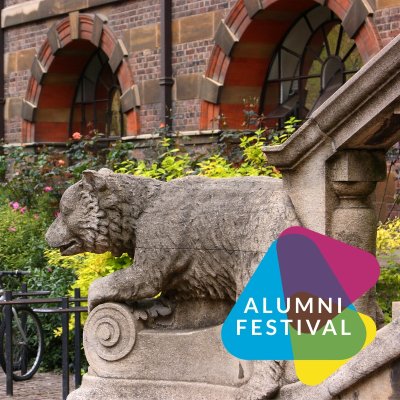
Deep Time and Rocky Futures: a tour of the Sedgwick Museum
Friday 18 September
Sedgwick Museum of Earth Sciences, Downing Street, Cambridge CB2 3EQ
Spectacular dinosaurs, gorgeous minerals, ancient coral reefs and a hippo from Cambridgeshire: this tour, led by Museum Director Dr Liz Hide, is the opportunity to see some of the highlights of the Museum and to learn more about the role the collection plays in understanding and addressing the global challenges of our time. As well as viewing rocks collected by Charles Darwin, there will also be the opportunity for alumni to explore the John Watson Building Stone Collection, an important economic geology collection that is not normally open to the public.
Book your place for 10:30am
Book your place for 12pm
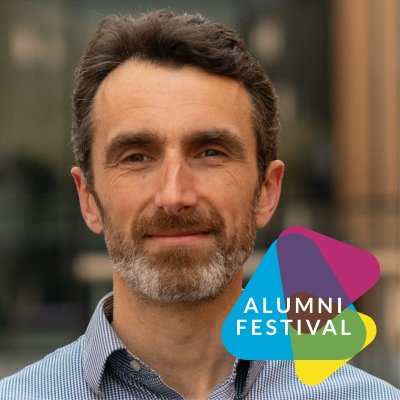
Beyond Superalloys: Exploring new high temperature alloys for more efficient aviation
Friday 18 September
Ray Dolby Centre, JJ Thomson Avenue, Cambridge CB3 0US
Professor Howard Stone, Tata Steel Professor of Metallurgy, Department of Materials Science and Metallurgy
Civil aviation continues to grow considerably, with global passenger numbers forecast to double over the next twenty years. This is motivating considerable efforts to improve efficiency and reduce emissions from the sector. One method by which this can be achieved is through higher engine operating temperatures and stresses, which improve the thermodynamic efficiency. However, existing alloys are already being used to the very limits of their capabilities. This presentation will introduce the challenges in finding new alloys that could offer the step change needed. It will describe the superalloys that are the current state-of-the-art, survey other material systems that have been investigated historically, and discuss the latest prospects for new high temperature alloys.
Book your place for 11am
Cosmic Origins: First Stars, First Black Holes, and the First Elements
Friday 18 September
Ray Dolby Centre, JJ Thomson Avenue, Cambridge CB3 0US
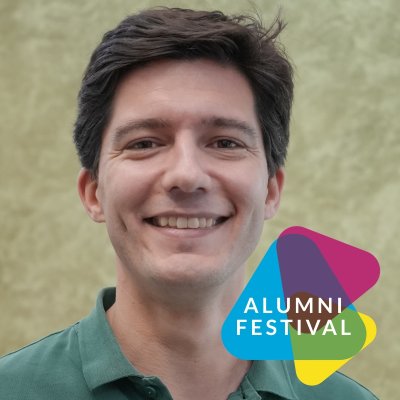
Dr Sandro Tacchella, Assistant Professor in Astrophysics, Kavli Institute for Cosmology, Department of Physics
How the James Webb Space Telescope is transforming our view of cosmic dawn
How did the Universe emerge from the cosmic dark ages to form the first stars, galaxies, and black holes? And where were the first chemical elements forged that would ultimately make planets and life possible?
In this talk, Dr Sandro Tacchella will explore the first chapter of cosmic history, when the first luminous objects transformed the young Universe and set the stage for everything that followed. He will discuss how the James Webb Space Telescope is revolutionising our understanding of this era, revealing surprisingly mature galaxies, unexpectedly rapid black hole growth, and new clues about the first episodes of chemical enrichment. Together, these discoveries are reshaping our picture of cosmic origins and raising profound new questions about how structure first emerged in the Universe.
Book your place for 1pm
Leadership in the age of AI
Friday 18 September
Sidgwick Site, West Road, Cambridge, CB3 9DP
Panel session including Dr James Fergusson, Professor of Theoretical Cosmology, Department of Applied Mathematics and Theoretical Physics
Chaired by Professor Bhaskar Vira, Pro-Vice-Chancellor for Education and Environmental Sustainability, Professor of Political Economy, Department of Geography
To celebrate the launch of Executive and Professional Education at the University of Cambridge, Pro-Vice-Chancellor Bhaskar Vira will chair this expert panel discussion bringing together representatives from Cambridge’s leading schools and institutes to explore how the University’s strength in artificial intelligence is shaping approaches to leadership and learning.
From tailored AI programmes for large corporations to executive-level learning for senior leaders and career-enhancing courses for professionals, experts from across Cambridge’s executive and professional education community will draw on their experiences of AI innovation, leadership, and education to offer a cross-disciplinary perspective on a rapidly evolving landscape, and what this means for businesses and career development alike.
Book your place for 2pm
How to bake a black hole - where mathematical analysis and general relativity meet
Friday 18 September
Ray Dolby Centre, JJ Thomson Avenue, Cambridge CB3 0US
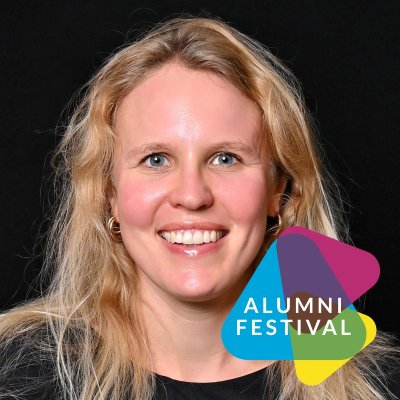
Dr Zoe Wyatt, Assistant Professor, Department of Pure Mathematics and Mathematical Statistics
Einstein's theory of gravity, general relativity, changed the way we think about our universe, showing that gravity is not simply a force pulling objects together, but a bending of space and time itself. More than a century after it was first proposed, the theory continues to explain fascinating phenomena such as the expansion of our universe, and the observation on Earth of gravitational waves emitted by black hole mergers.
In this talk Dr Wyatt will provide a lay introduction to some key ideas behind general relativity before highlighting some recent advances in her research field of mathematical general relativity, where mathematicians use tools in analysis and partial differential equations (our baking ingredients!) to improve our understanding of Einstein’s theory.
Book your place for 2:30pm
Putting uncertainty to work
Friday 18 September
Ray Dolby Centre, JJ Thomson Avenue, Cambridge CB3 0US
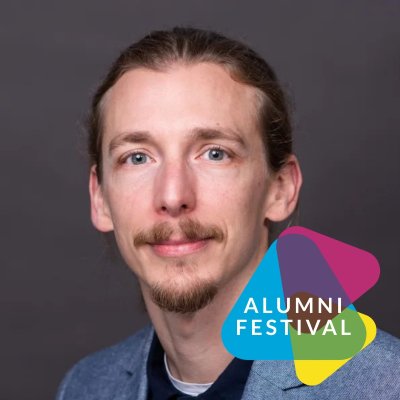
Professor Dorian Gangloff, Associate Professor of Quantum Technology, Cavendish Laboratory Department of Physics
The uncertainty principle of quantum mechanics could be the most profound discovery of modern physics. Its implications are wide ranging, from philosophy of science to engineering. The underlying mechanics that lead us to the uncertainty principle also lead us to entanglement -- a joint property of multiple particles that says "you will get pure randomness, unless you observe a coupled system using a coupled observation". This simple rule -- unique to the quantum world -- can be engineered to transform the way we calculate, via a quantum computer, and the way we communicate, via quantum cryptography.
Book your place for 2:30pm
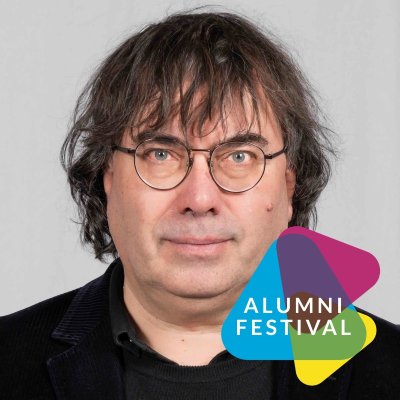
Materials discovery in the age of AI, followed by a drinks reception at the RDC
Friday 18 September
Ray Dolby Centre, JJ Thomson Avenue, Cambridge CB3 0US]
Professor Nicola Marzari, Cavendish Professor of Physics, Cavendish Laboratory Department of Physics
Materials underpin many of the technologies that drive our economy and sustain our society. Providing reliable, predictive descriptions of their behaviour from first principles remains a defining challenge for condensed-matter physics, and one made increasingly urgent by the convergence of high-performance computing, machine learning, and
artificial intelligence, which are transforming the scale and scope of materials design and discovery, and more broadly of 21st-century science.
Professor Nicola Marzari will discuss recent progress on these fronts: on the accuracy of quantum mechanical predictions of materials properties, on how these can now be machine learned to greatly extend the complexity of systems studied, and on how automation, agency, and autonomy will drive and orchestrate systematic campaigns of materials discovery and exploration.
Book your place for 4pm
Following Professor Marzari's talk, there will be a drinks reception in the foyer of the Ray Dolby Centre.
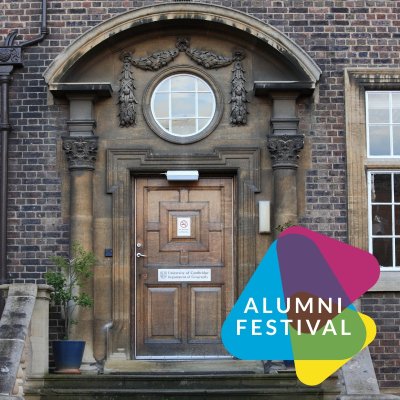
Teaching Geography today: What’s changed and what hasn’t?!
Friday 18 September
Geography Library, Department of Geography, Downing Place, Cambridge, CB2 3EN
Professor Emma Mawdsley Head of Department, Professor of Geography, and Fellow, Newnham College, Department of Geography
Geography is a discipline that constantly evolves to meet the challenges of a changing world. In this light and engaging session, Professor Emma Mawdsley will offer a look into the state of Geography today, exploring how the famous Cambridge Tripos has adapted to reflect contemporary global shifts. Whether you graduated five or fifty years ago, this is a unique opportunity to see how the department continues to push the boundaries of both human and physical geography. You will be able to look back through our Tripos exam books, and remind yourself of your exams (if you wish!).
Following Emma’s short talk, we invite alumni and their families to join us for a drinks reception in the library. This will be a fantastic opportunity to meet current students and postdocs, who will be showcasing their cutting-edge research and sharing stories from their work in the field. Come discover how the next generation of Cambridge geographers is tackling the world's most pressing questions.
Accessible, family-friendly, and thought-provoking, this event offers a warm welcome back to the department and a compelling insight into why Geography matters now more than ever.
Book your place for 5pm
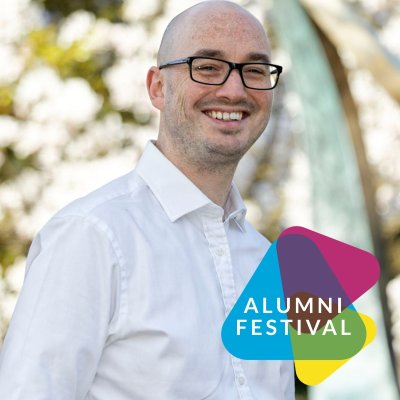
The role of atmospheric chemistry in climate and life — in the Universe!
Friday 18 September
Yusuf Hamied Department of Chemistry, Lensfield Road, Cambridge, CB2 1EW
Professor Alex T. Archibald, Professor of Atmospheric Chemistry, Yusuf Hamied Department of Chemistry
Change is in the air
Alex Archibald is a Professor of Atmospheric Chemistry whose research explores the gases and particles in the air around us, and how they influence our environment and climate. In this talk, Professor Archibald will introduce how atmospheric chemistry shapes not only life on Earth but also the potential for habitable environments across the Universe. Drawing on the latest work from his research group, he will explain how understanding the air we breathe can reveal much about the past, present, and future of our planet, and others beyond it. He will also explore some of the most pressing challenges facing the field today, including the emerging and often controversial topic of climate engineering. What might it mean to deliberately alter the atmosphere? What are the risks, and who decides?
Accessible and thought-provoking, this talk will offer a compelling insight into a field that sits at the heart of global environmental change, and will highlight why atmospheric chemistry matters to us all.
Book your place for 6pm
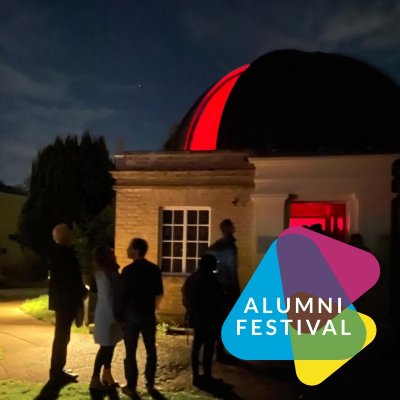
Stargazing at the Institute of Astronomy
Friday 18 September
Institute of Astronomy, Madingley Road, Cambridge CB3 0HA
Dr Matthew Bothwell, Public Astronomer, Institute of Astronomy
Join fellow alumni for a memorable evening under the stars at the Institute of Astronomy. Inspired by the Institute’s much-loved public open evenings, this special event offers the chance to explore the wonders of the night sky, hosted by members of the Cambridge Astronomical Association.
The evening will begin with a drinks reception, followed by a fascinating talk from Dr Matthew Bothwell. Afterwards, weather permitting, guests will enjoy an opportunity to take part in stargazing on the Observatory grounds and observe the night sky through the Institute’s telescopes.
Whether you are a lifelong astronomy enthusiast or simply curious about the cosmos, this promises to be an evening of discovery, conversation and celestial observation.
Book your place for 7pm
Real impact or just hype: Is AI truly driving organisational value?
Saturday 19 September
Sidgwick Site, West Road, Cambridge, CB3 9DP
Professor James Fergusson, Professor of Theoretical Cosmology, Department of Applied Mathematics and Theoretical Physics
Artificial intelligence is reshaping how organisations operate, innovate and grow. In this keynote, University of Cambridge AI expert Professor James Fergusson will explore the opportunities and challenges of AI transformation, reflecting the breadth of Cambridge’s thought leadership and interdisciplinary expertise in the field.
Touching on areas such as AI foundations, types of systems and challenges of implementation, future of work, and effect on skills and talent development, the session will offer a strategic perspective on how organisations can navigate the complexities of AI adoption and unlock its potential for long-term value creation.
Book your place for 9:30am
Quantum Collisions: A New Force?
Saturday 19 September
Richard Eden Suite, West Court, Clare Hall, Herschel Road, Cambridge, CB3 9AG
Professor Ben Allanach, Professorial Fellow (2025), Clare Hall, DAMTP
When protons collide at near light speed inside the vast underground ring at CERN, they recreate conditions that last existed fractions of a second after the Big Bang. These extraordinary experiments led to the discovery of the Higgs boson, but they may now be hinting at something even more surprising.
In this talk, Professor Ben Allanach, Professor of Theoretical Physics at the University of Cambridge, will take us inside the world of high-energy particle collisions. Proton-proton collisions at CERN have discovered the Higgs boson. Currently, some other particles being produced are decaying certain ways that disagree with the standard theory. After describing how the collisions and their measurements are done, he will discuss the hypothesis that this is due to a previously undiscovered force.
Book your place for 10:45pm
Using inorganic chemistry to boost light in natural and artificial photosynthesis
Saturday 19 September
Sidgwick Site, West Road, Cambridge, CB3 9DP
Professor Dominic Wright, Professor of Inorganic Chemistry, Yusuf Hamied Department of Chemistry
Two of the major problems facing humankind in the future are energy and food, and yet there is more than enough energy from the sun to provide solutions to both of these issues. Polyoxo-metal cages are an extensive family of molecular species which can be regarded as well-defined fragments of semi-conducting titanium dioxide. The lecture explores how these cages can be used either as precursors for water-slitting devices (producing hydrogen fuel by ‘artificial photosynthesis’) or as stabilising frameworks for modifying ambient light to boost natural photosynthesis.
Book your place for 11am
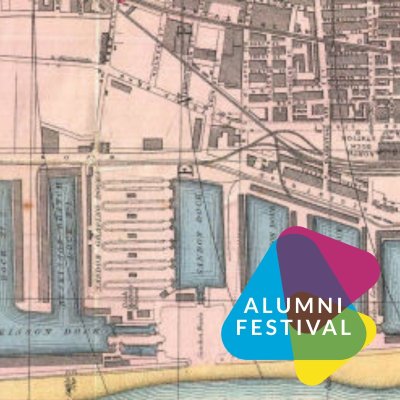
Geolinking British Lives 1851-1921
Saturday 19 September
Sidgwick Site, West Road, Cambridge, CB3 9DP
Panel session including Dr Emma Diduch, Researcher, The Cambridge Group for the History of Population
Following lives across Victorian and Edwardian Britain
Every census captures a snapshot of the society but also a moment in a person’s life. Our project asks what happens when we connect those moments together. Using millions of census records from England and Wales between 1841 and 1921, we are developing new methods to trace people and families across decades and locate them very precisely in the places where they lived. This will allow researchers, genealogists, and the wider public to explore how ordinary lives were shaped by migration, marriage, work, urban transformation, and social change. In this session we will explain how we manage to link the data and show some of the key features our research is now focusing on.
Book your place for 1:30pm
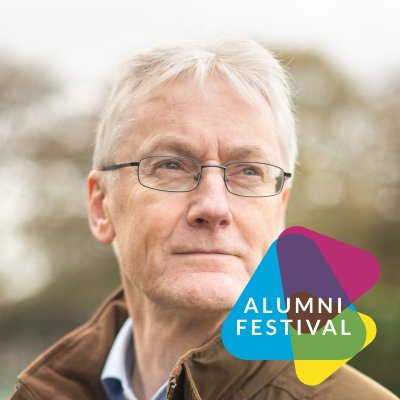
Making Temperature Global
Saturday 19 September
Sidgwick Site, West Road, Cambridge, CB3 9DP
Professor Mike Hulme, Professor of Human Geography, Department of Geography
Numbers shape the world around us in powerful ways. Global temperature is one such number which, over the past 30 years, has become central for guiding and evaluating international climate policy. From the Paris Agreement, with its aim to limit global warming to between 1.5 and 2°C above the 19th century level, to the concept of Net Zero, global temperature shapes global politics and our visions for the future. It has become an ‘emperor indicator’.
But what is global temperature? Was it discovered or invented, and when? How did scientists come to place such importance on this one number?
Based on a forthcoming book, this talk introduces the history of this hugely consequential number which has hitherto remained untold. The story starts in the 1870s and culminates in the early 1980s when two independent efforts, on either side of the Atlantic, resulted in this index of global climate first gaining scientific credibility and, more importantly, political salience.
Understanding this history helps us see more clearly the merits and demerits of using global temperature to guide policy. But might there have been, and might there still be, better ways of measuring the health of the world’s climate?
Book your place for 1:30pm
Can we smell cancer?
Saturday 19 September
Sidgwick Site, West Road, Cambridge, CB3 9DP
Professor Jeremy Baumberg, Director of the Nanophotonics Centre, Cavendish Laboratory Department of Physics
How new types of sensors can revolution personal health, but unleash a data minefield
Rising healthcare costs are increasingly bankrupting all care systems around the world. Only by keeping people out of hospitals through early detection and diagnosis can this be averted. However low-cost detection of biomolecules is challenging. In this talk, Professor Baumberg will describe how we're responding to this challenge using vibrational spectroscopies enabled through nanotechnology, and what progress we can expect in the next few years. He'll also discuss how our curation of healthcare data might change, and how we might think about this data as a resource or a curse.
Book your place for 3pm
Look back at the recordings of Physical Sciences sessions from previous years
Are you receiving the latest news from your department?
Update your contact details to ensure you receive the latest news, events, and updates from your department.