
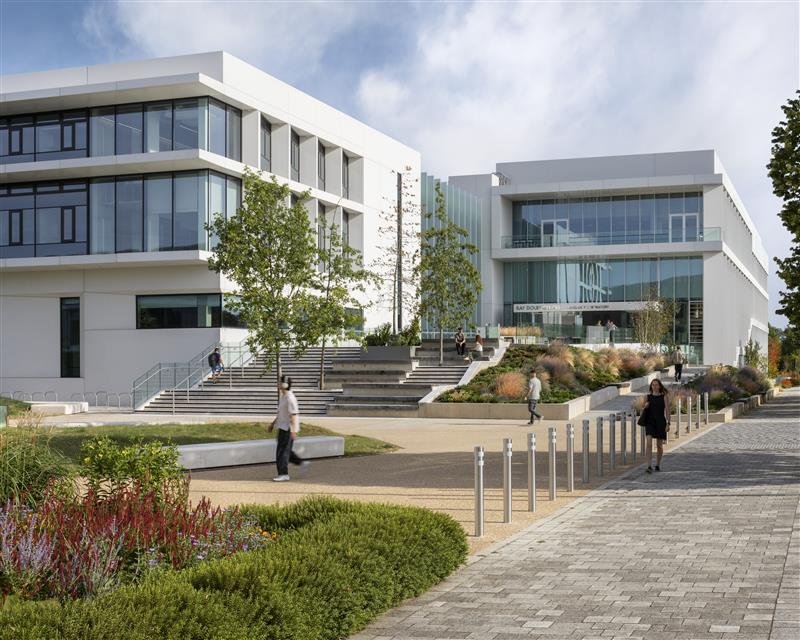
Here is a summary of the sessions taking place at The Ray Dolby Centre, Cavendish Laboratory on Friday 18 September
Address: Ray Dolby Centre, JJ Thomson Avenue, Cambridge CB3 0US
Book your tickets here
Professor Howard Stone, Tata Steel Professor of Metallurgy, Department of Materials Science and Metallurgy
Civil aviation continues to grow considerably, with global passenger numbers forecast to double over the next twenty years. This is motivating considerable efforts to improve efficiency and reduce emissions from the sector. One method by which this can be achieved is through higher engine operating temperatures and stresses, which improve the thermodynamic efficiency. However, existing alloys are already being used to the very limits of their capabilities. This presentation will introduce the challenges in finding new alloys that could offer the step change needed. It will describe the superalloys that are the current state-of-the-art, survey other material systems that have been investigated historically, and discuss the latest prospects for new high temperature alloys.
Book your place for 11am
Dr Katie Seaborn, Associate Professor in Human-Computer Interaction, Department of Computer Science and Technology
Deception in the user interface (UI) is an everyday wicked problem. Millions of people, knowingly or otherwise, encounter manipulative tactics across a range of digital products and services: from online stores to virtual companions to free-to-play games. These deceptive design strategies, also called "dark patterns," digital "sludge," and interface deception, represent a conflict between business objectives and user autonomy. Companies rely on interface deception to improve profit margins. The line between manipulation and mere influence can be ambiguous, especially when the user benefits. New tricks emerge from designer creativity at the speed of innovation. In this talk, Dr Seaborn will frame interface deception as a subject of study in the field of human-computer interaction (HCI). She’ll expose a range of "tricks" from real life and then cover research that aims to advance scientific knowledge and provide industry professionals and regulators with the evidence needed to make decisions about practice and policy.
Book your place for 11am
Professor Cecilia Mascolo, Professor of Mobile Systems, Department of Computer Science and Technology
This talk will explore how wearable technologies and artificial intelligence are reshaping our understanding of human health and behaviour. From smartwatches and smartphones to next-generation sensing devices (such as earbuds), everyday technologies can now help detect illness earlier, monitor wellbeing continuously, and support more personalised healthcare.
Drawing on pioneering research at the intersection of AI, mobile systems, and digital health, this talk examines both the extraordinary opportunities and the important ethical challenges of these technologies. The session will offer a glimpse into a future where data-driven health tools become part of daily life, helping people live healthier, safer, and more independent lives.
Book your place for 1pm
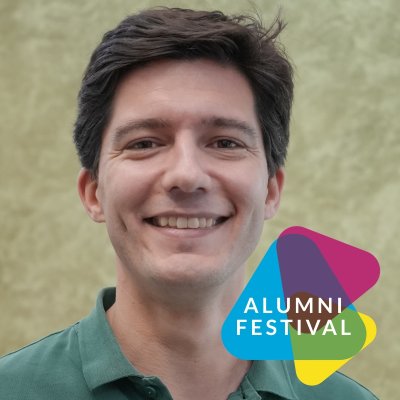
Dr Sandro Tacchella, Assistant Professor in Astrophysics, Kavli Institute for Cosmology, Department of Physics
How the James Webb Space Telescope is transforming our view of cosmic dawn
How did the Universe emerge from the cosmic dark ages to form the first stars, galaxies, and black holes? And where were the first chemical elements forged that would ultimately make planets and life possible?
In this talk, Dr Sandro Tacchella will explore the first chapter of cosmic history, when the first luminous objects transformed the young Universe and set the stage for everything that followed. He will discuss how the James Webb Space Telescope is revolutionising our understanding of this era, revealing surprisingly mature galaxies, unexpectedly rapid black hole growth, and new clues about the first episodes of chemical enrichment. Together, these discoveries are reshaping our picture of cosmic origins and raising profound new questions about how structure first emerged in the Universe.
Book your place for 1pm
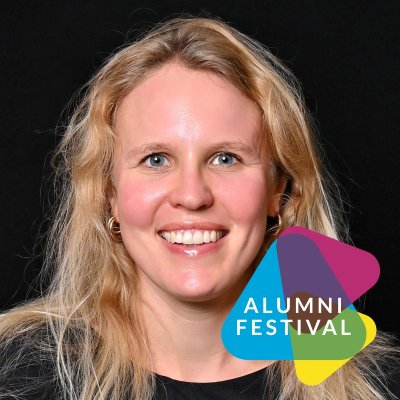
Dr Zoe Wyatt, Assistant Professor, Department of Pure Mathematics and Mathematical Statistics
Einstein's theory of gravity, general relativity, changed the way we think about our universe, showing that gravity is not simply a force pulling objects together, but a bending of space and time itself. More than a century after it was first proposed, the theory continues to explain fascinating phenomena such as the expansion of our universe, and the observation on Earth of gravitational waves emitted by black hole mergers.
In this talk Dr Wyatt will provide a lay introduction to some key ideas behind general relativity before highlighting some recent advances in her research field of mathematical general relativity, where mathematicians use tools in analysis and partial differential equations (our baking ingredients!) to improve our understanding of Einstein’s theory.
Book your place for 2:30pm
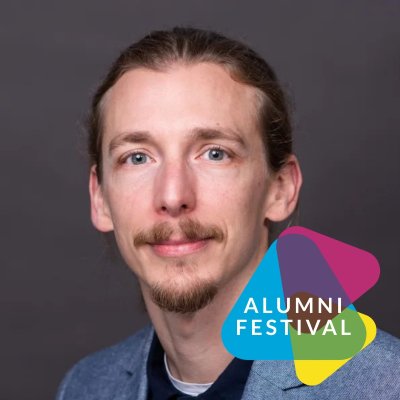
Professor Dorian Gangloff, Associate Professor of Quantum Technology, Cavendish Laboratory Department of Physics
The uncertainty principle of quantum mechanics could be the most profound discovery of modern physics. Its implications are wide ranging, from philosophy of science to engineering. The underlying mechanics that lead us to the uncertainty principle also lead us to entanglement -- a joint property of multiple particles that says "you will get pure randomness, unless you observe a coupled system using a coupled observation". This simple rule -- unique to the quantum world -- can be engineered to transform the way we calculate, via a quantum computer, and the way we communicate, via quantum cryptography.
Book your place for 2:30pm
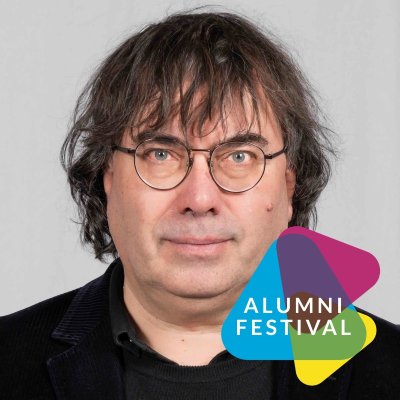
Professor Nicola Marzari, Cavendish Professor of Physics, Cavendish Laboratory Department of Physics
Materials underpin many of the technologies that drive our economy and sustain our society. Providing reliable, predictive descriptions of their behaviour from first principles remains a defining challenge for condensed-matter physics, and one made increasingly urgent by the convergence of high-performance computing, machine learning, and
artificial intelligence, which are transforming the scale and scope of materials design and discovery, and more broadly of 21st-century science.
Professor Nicola Marzari will discuss recent progress on these fronts: on the accuracy of quantum mechanical predictions of materials properties, on how these can now be machine learned to greatly extend the complexity of systems studied, and on how automation, agency, and autonomy will drive and orchestrate systematic campaigns of materials discovery and exploration.
Book your place for 4pm
Following Professor Marzari's talk, there will be a drinks reception in the foyer of the Ray Dolby Centre.
Discover the history of physics
During your visit, why not stop by the Cavendish Museum at the Ray Dolby Centre to see one of J. J. Thomson’s original cathode ray tubes, used in the discovery of the electron, as well as part of the accelerator built by Cockcroft and Walton.
Stop for lunch
Take a break at the Cavendish Café for lunch, coffee or a quick bite to eat.
Need somewhere to work?
Have meetings during your visit? Head to the West Hub, where you’ll find desk space and meeting pods.While you’re there, why not try the Hub’s new Mediterranean-inspired kitchen and bar?
Update your contact details to ensure you receive the latest news, events, and updates from your department.