
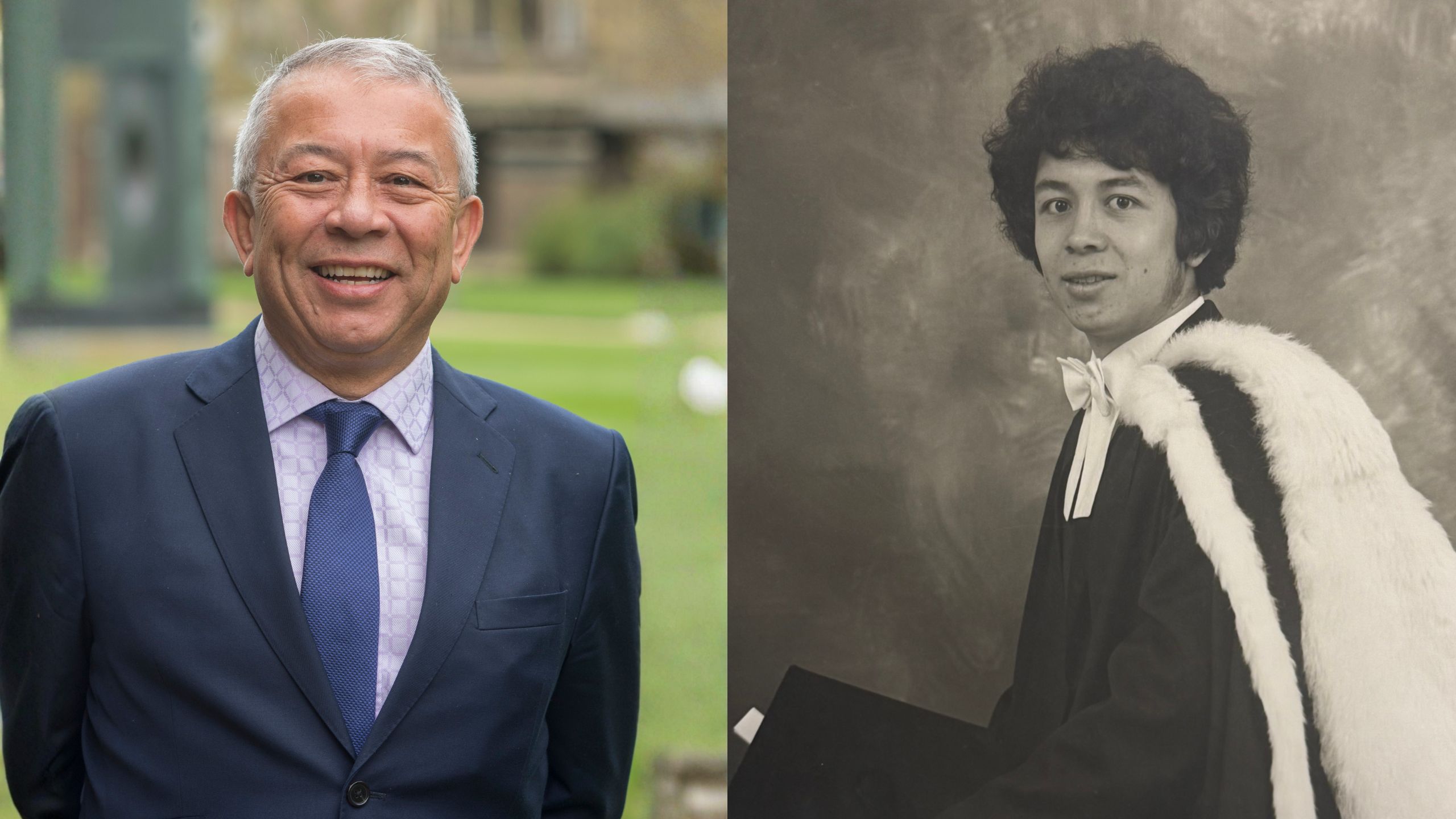
With the Bennett School of Public Policy newly launched, donor and leading light Peter Bennett (Churchill 1975, Economics) shares his philosophy of giving and his ambitions for the School's impact.

The new Bennett School of Public Policy, expanded from the Bennett Institute for Public Policy, is Cambridge’s flagship, multi-disciplinary school that seeks to drive ‘the right kind of growth, fairly shared’. The School aims to prepare future policymakers and foster a climate of ideas by connecting political thinking, economics, the humanities, health, technology, engineering and science.
Peter Bennett has directly shaped this approach, which combines insights and breaks traditional academic silos: he is passionate about cross-disciplinary groups of academics, and about industry and the state sector working together. And, as the founding benefactor of the Peter Bennett Foundation, Peter has been able to match passion to purpose. His Foundation has also supported the new Whittle Laboratory at Cambridge with the establishment of The Bennett Innovation Laboratory, a radical multidisciplinary innovation centre that brings together world-leading experts to solve complex challenges.
Peter is a philanthropist with a clear vision, as well as the ambition to work in alliance with inspiring people and organisations to leverage everyone’s strengths. How did this Churchill alumnus blend a belief in community with an innate talent for economics to empower, in his words, “good people to do more”?
Born and brought up in Hong Kong, with a Chinese mother and a British father, Peter imbibed very strong family and community values. He arrived in the UK in his teens and was drawn to Churchill, especially to Churchill’s mix of students from a broad range of backgrounds and nationalities, when visiting his sister who was attending Girton.

After building a successful career in finance, springboarded by his Economics degree at Churchill, Peter refocused his time and efforts on the business of philanthropy:
“When I realised that I was able to provide ample security and comfort for my family, I knew that I had to divert resources to improving prospects and quality of life in the wider community. I spent time working with both large and small NGOs as my philanthropic journey evolved, seeking the best way to achieve impact and systemic change. This road led me back to Cambridge and has opened a new chapter in supporting long-term academic endeavours across a range of disciplines.”
Peter’s partnership with Cambridge began with the endowment of a Chair and quickly led to the establishment of the Bennett Institute for Public Policy, which now stands as the fully independent Bennett School for Public Policy. The astounding growth of the School and its influential reach can be credited to the exceptional team of academics at Cambridge. As Peter said: “I am a big believer in backing the right people to make things happen, and I am delighted by what Dame Diane Coyle and Professor Mike Kenny have achieved in such a short time. Their work is grounded in the ethos of ‘the right kind of growth, fairly shared,’ which is very important to me.”
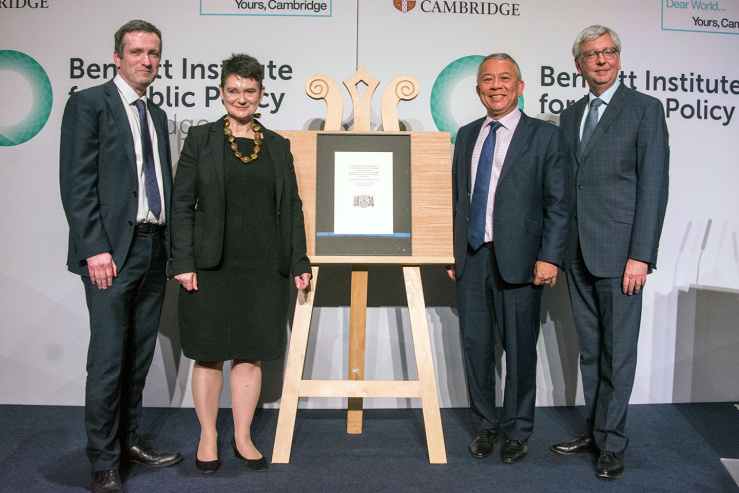
Professor Mike Kenny, Professor Dame Diane Coyle, Peter Bennett and former Vice-Chancellor, Professor Stephen Toope at the opening of the Bennett Institute for Public Policy.
Following closely behind the launch of the Bennett School is the expected opening of the new Whittle Laboratory at Cambridge in early 2026. Peter has been championing the work of the Whittle in the pursuit of net zero in the aviation sector, and particularly supporting disruptive innovation with the Bennett Innovation Lab, which will connect experts across disciplines to deliver transformative, hardware-intensive technologies, solutions, and growth.
Both projects are expressions of Peter’s long experience of bringing together people from different backgrounds to achieve success in the finance sector. He used a multi-disciplinary approach to innovate in areas like derivatives and mortgage-backed securities, and in doing so created huge business opportunities. He decided to apply the same approach to academic research: “I want to back good people doing good things, and bring together open-minded people with ideas, ambition, and drive, and throw them into a room together! It doesn’t matter whether they are historians or economists, engineers or scientists: smart people want to work with, and learn from, other smart people. It’s about incubating great ideas, sharing them, and trying to make them a reality for the benefit of everyone”.
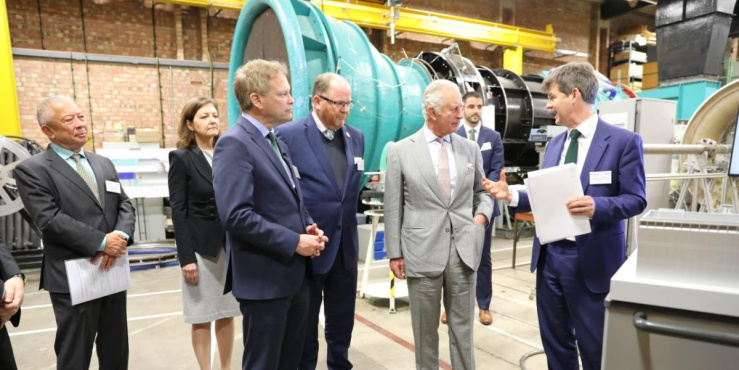
Peter Bennett in attendance as King Charles III visits the Whittle Laboratory in 2023. Credit: Lloyd Mann
These research engines under the Bennett umbrella benefit from synergies and connections despite their different areas of focus. As Peter notes: “It’s great to have so many amazing people sitting around together and sharing their experiences, challenges, and expertise. We hope this makes each individual organisation stronger and elevates the collective impact and influence.”
By investing in research institutions, the overarching plan is to leverage the treasure trove of experience they comprise. And, with the endowment model offered by universities, which few NGOs can rival, Peter can ensure his donation provides a sustainable revenue source that could exist indefinitely: “This is a key attraction for supporting university research to deliver philanthropic impact. Big universities like Cambridge have demonstrated an enviable track record in managing money and delivering returns. This is important to donors like me, who have an investor mindset.”
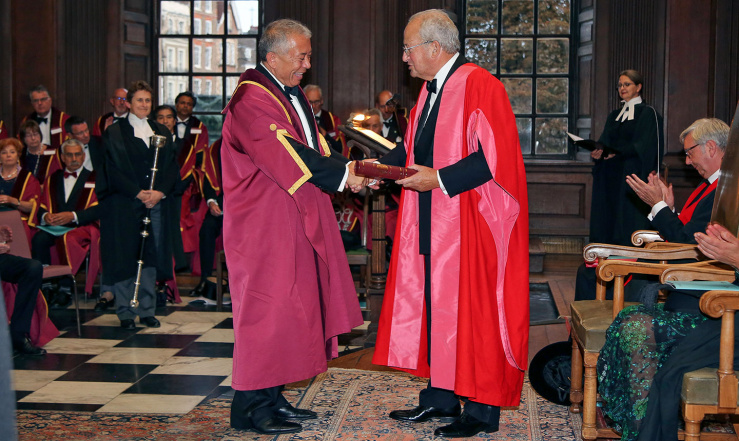
Peter Bennett being inducted into the University's Guild of Cambridge Benefactors.
After a career that spanned London, New York, and Hong Kong, Peter has returned to his Cambridge roots to help drive positive change in the wider community. By future-gazing, planning, and educating for tomorrow’s generations, together Peter and Cambridge are evolving a far-reaching plan for long-term impact. As Peter summarises it:
“I’m very proud of the Foundation’s initiatives at Cambridge. One of the good things about funding education is that you’re supporting institutions that are likely to exist for hundreds of years. I don't think about whether something can be changed over a few years, but rather over decades and centuries. I may not be around to see the results, but if I can have faith in the individual, the idea, and the institution, then maybe this does change the world. I believe that if you back good people doing good things, then good things will happen. A virtuous circle is a great legacy to leave”.