
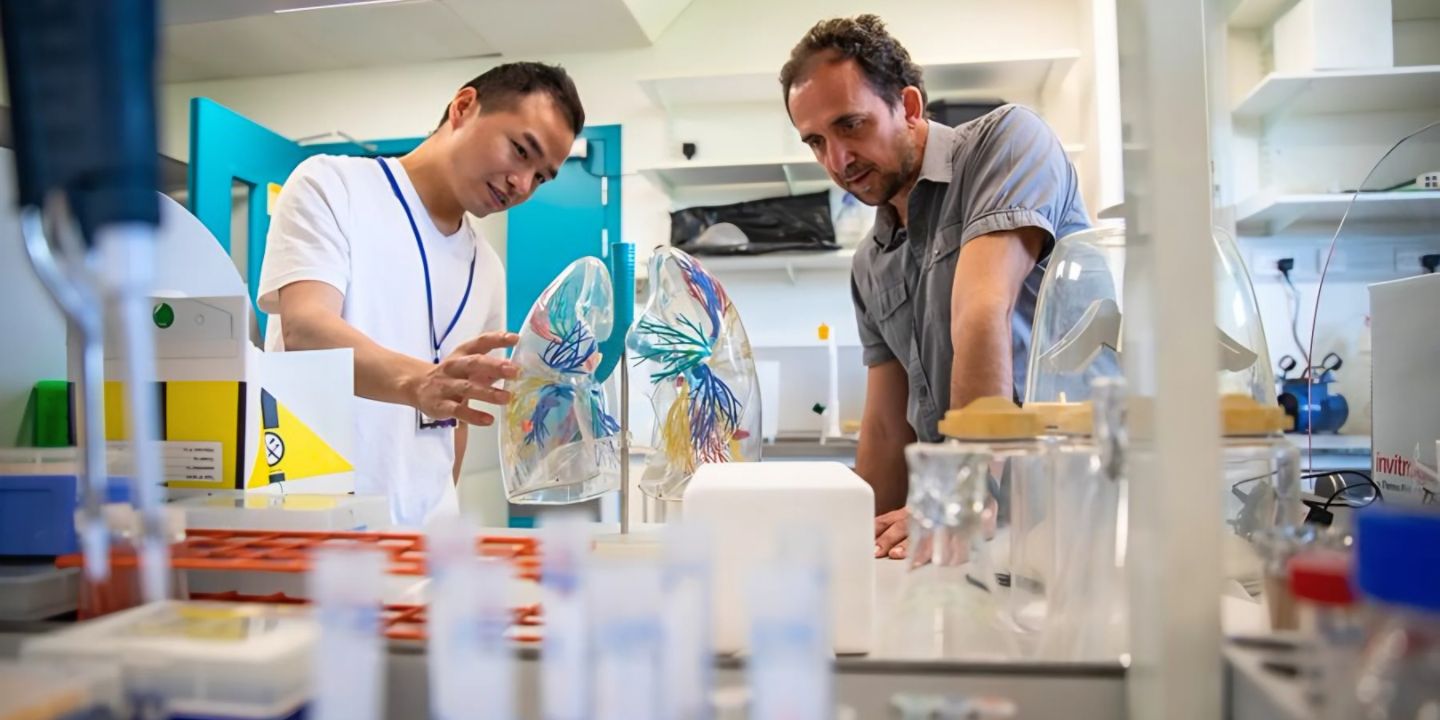
The Early Cancer Innovation Institute (ECII), a key function in the new Cambridge Cancer Research Hospital, has been awarded funding for world-leading multidisciplinary research on detecting cancer at its earliest stages.

With cancer rates still rising globally despite decades of successful advances in treatments, the focus has turned to prevention, early detection, and personalised medicine. The earlier we can detect cancer, the easier it is to treat and potentially cure, saving lives, improving quality of life, and reducing the impacts on health services and the economy. At Cambridge, our work on early detection is world-leading, with 12 established research teams working across diverse areas, from novel physical devices to applying AI in image analysis.
The ECII will bring together engineers, physicists, and computer scientists to work with clinical researchers, doctors, and patients under one roof, to accelerate the discovery and translation of new techniques for cancer early detection. Establishing the ECII within the new Hospital will enable the ideas and prototypes to be tested and iterated far more quickly with patients, to enter clinical trials, and ultimately to be adopted across the NHS and beyond. The site for the Hospital is currently being prepared for construction to start, with the building due to open by 2030.
Professor Rebecca Fitzgerald OBE, Director of the Early Cancer Institute, University of Cambridge, said:
“On behalf of all my colleagues working on new, groundbreaking solutions for diagnosing cancer early, we are very grateful for the Wolfson Foundation’s support for the new Early Cancer Innovation Institute. Bringing researchers into proximity with clinicians and patients in this new clinic within the Cambridge Cancer Research Hospital will propel our work forward and bring benefits faster to patients.”
Professor Richard Gilbertson, Head of the Cancer Research UK Cambridge Centre and Li Ka Shing Chair and Head of Department of Oncology at the University of Cambridge, added:
"Receiving this generous support from the Wolfson Foundation is a testament to the huge potential for the new Hospital to make a step change in our ability to catch cancer earlier and treat it better.”
Paul Ramsbottom, Chief Executive of the Wolfson Foundation, said:
“Detecting cancer earlier is a critical challenge in modern medicine, with the potential to improve survival and reduce the burden of treatment on individuals and health systems alike. The ECII will equip Cambridge’s exceptional team to make progress in this rapidly advancing field. We are delighted to support this ambitious project, which has real potential to change the future of cancer care.”
Support us
To learn more about supporting the Cambridge Cancer Research Hospital, please contact:
Head of Development, Cancer
- Dominic Antill
- dominic.antill@admin.cam.ac.uk