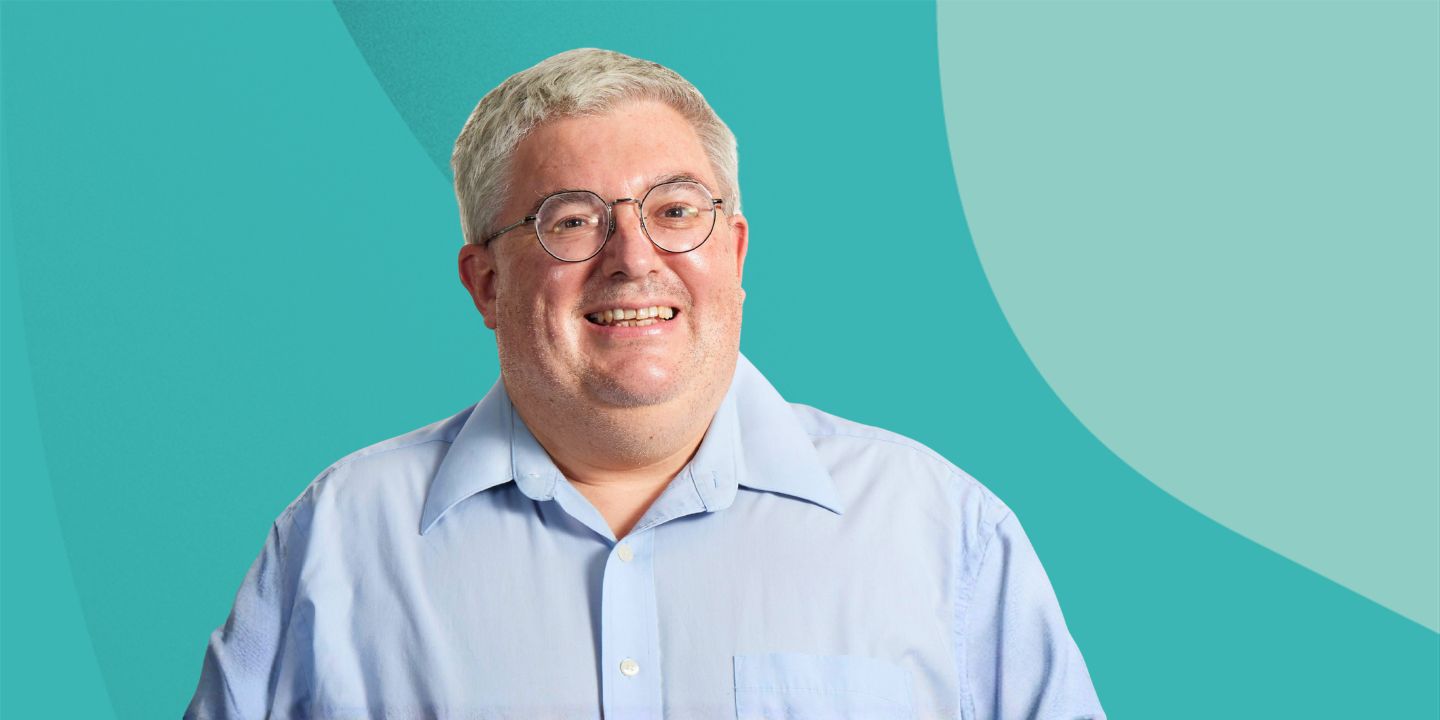
An entrepreneurial alumnus whose time at Cambridge helped him develop his fascination with computers into a string of successful businesses is endowing a professorship and a PhD studentship at the Department of Computer Science and Technology.

“I’ve done well out of the skills I was taught here,” says Dr Mark Hayter (St John’s 1985), “and I think it is right to give back.”
Mark is currently based in California, having sold his most recent business, the AI chip start-up Rivos, to Meta last year. He has maintained links with the Department and his College, where he recently became a Fellow Benefactor. He plans to return to Cambridge over the next few years as he approaches retirement.
“That’s why I’d like to do this now,” he adds of his decision to make this significant donation. “I’ll be around and will be able to see the benefits it will bring.”
“This is an incredibly generous gift,” says Head of Department Alastair Beresford. “I’m very grateful to Mark for the support he is giving us.”
News of the gift was shared last week with alumni and Department members at an event to unveil a blue plaque to EDSAC, the very first computer built at Cambridge University in 1949, and one that is a landmark in the history of modern computing.
EDSAC was built to provide a service to Cambridge University researchers and contributed to at least three Nobel Prizes. It was deliberately designed to support the users of the machine, researchers from other departments, who could run their programs on it without needing to understand all the technical details of how it worked.
In a talk at the event, Mark explained that this had required the EDSAC team “to work across all areas of computer science, from building hardware to inventing system software, creating a subroutine library, thinking about numerical analysis and addressing data corruption, among others. So, the early Department was already covering the full scope of the subject.”
And as he went on to explain, this resonates with his personal approach. “That spirit of bringing diverse disciplines together is what I have sought to foster in my own career. The success Rivos has had as a semiconductor start-up was driven by the same philosophy: having engineers from platform hardware, firmware, systems software, compiler, library, numerics and AI, all driving the chip design from the start. As with EDSAC, the system is there to support programs written by users.”
So, in memory of the early work in computing that took place at Cambridge in the 1940s, “and in recognition that its legacy covers the full breadth of the discipline,” Mark says, “I’m very pleased that I can endow the EDSAC professorship in Computer Science”.
The PhD studentship that Mark is also endowing will be just as highly valued by the Department, allowing it to offer places to more of the outstanding students who apply.
Student support, it turns out, is also an issue close to Mark’s heart. He is grateful for the eight years he was able to spend at Cambridge, first studying for a BA in Natural Sciences and then, after graduating, changing disciplines to study for a Diploma and a PhD in Computer Science.
This tapped into the enthusiasm he’d first developed as a schoolboy for electronics and building his own computers, and helped him turn it into a career during which he co-founded and sold four successful businesses.
He has many fond memories of his time at Cambridge, particularly Friday evenings in the pub with his fellow students at the Computer Laboratory (as the Department was then called) and its Head of Department, the pioneering computer scientist Roger Needham.
“He would come in on a Friday afternoon,” Mark recalls, grinning, “and start pacing up and down. You just knew he was waiting for someone to say, ‘Is it time to go to the pub?’! But actually, lots of ideas were exchanged during those evenings in the pub. It’s very important to have these informal spaces where you can get chatting to different people and share your thoughts and ideas.”
He also appreciates the time that his PhD gave him to “build stuff and put programs on it”. This included helping to build an Asynchronous Transfer Mode (ATM) Local Area Network and then applying the same technology and principles to building a Desk Area Network. (His thesis on a workstation architecture to support multimedia describes this.)
But the fact that Mark was able to spend eight years at Cambridge is, he says, due to the support he received from the government, which at that time paid students’ fees and offered means-tested maintenance grants without requiring them to be repaid. So he left university without the large debts that today’s undergraduates incur.
“I was a beneficiary of that system and received support throughout my time at Cambridge,” Mark says. “I appreciate that, and it’s why I have been supporting my College, and am pleased to support research in the Department with this donation.”
Find out more
For more information or to discuss how you can support the Department of Computer Science and Technology, please contact:
Head of Development, Technology
- Victoria Thompson
- victoria.thompson@admin.cam.ac.uk