‘We all see the artefacts in a different light after hearing the stories behind them.’
There are many ways to support a cause or an institution near to your heart, and a ‘deed of variation’ legacy is an important option to know about. I am always learning something new about the finer points of legacy giving and am eager to share these insights, which I hope can help with estate planning.
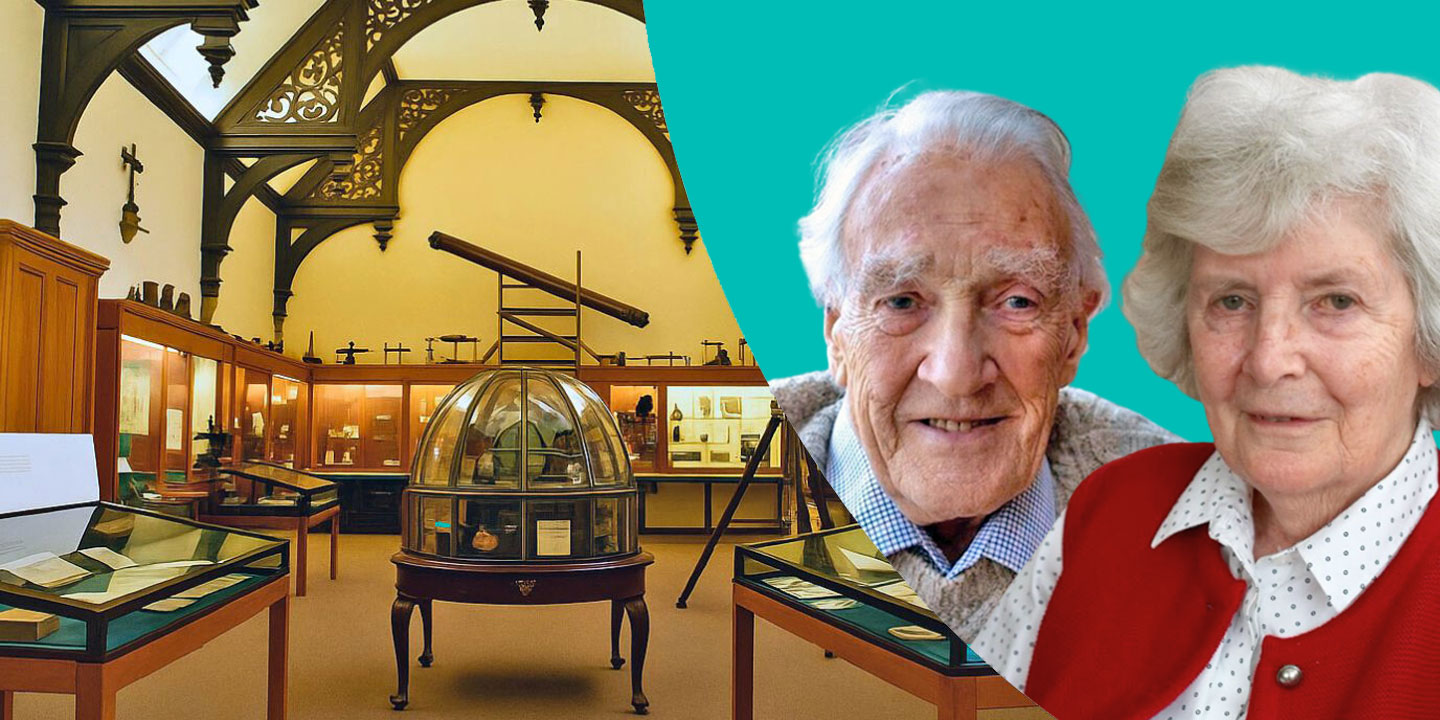
In the case of the late Sylvia and Ian Young, not only does their fascinating legacy philanthropy story fold into their wider family, but it also features an unusually powerful connection to the beneficiary institution—in this case: the University of Cambridge’s Whipple Museum of the History of Science.
The Whipple Museum takes its name from Robert Stewart Whipple (1871-1953), who presented his collection of 1,000 scientific instruments and a similar number of rare books to the University in 1944. Whipple had a life-long connection with the world of scientific instruments: his father, George Mathews Whipple, was a scientist and later superintendent of the Royal Observatory at Kew, and Whipple started his working life as an assistant at Kew and later became assistant manager at instrument maker L. P. Casella. He came to Cambridge in 1898 as a personal assistant to Horace Darwin (the youngest son of Charles Darwin), the founder of the Cambridge Scientific Instrument Company. Whipple rose to become managing director of the firm and later its chairman.
Professor Ian Robert Young, grandson of Robert Whipple, and his wife Sylvia unsurprisingly felt a strong bond to the Museum and the people who work there. Both enjoyed their regular visits to Cambridge and were keen supporters of the Museum’s work. Their interest and dedication are shared with equal enthusiasm by the next two generations of the family, the great-grandchildren and great-great-grandchildren of Robert Whipple. The family’s deep-rooted engagement and vision led to the establishment of Ian and Sylvia’s gift—designed to set up a learning fund for the Whipple—as a ‘deed of variation’ legacy.
A Deed of Variation might be a new concept for those of us not closely acquainted with the law around Wills.
After someone dies, a Deed of Variation makes it possible for the beneficiaries to make changes to the distribution of the estate instead of directly following the terms of the will or the rules of intestacy.
There are several reasons why changing the distribution of an estate may be desirable, including:
- Making the distribution equal among the beneficiaries
- Providing for someone who was not included in the Will, such as a grandchild who was born after the Will was made
- Providing for someone to whom the rules of intestacy do not apply, such as a partner or stepchild
- Tidying up any uncertainty in the Will
- Inheritance tax planning reasons, such as including a charity as a beneficiary, to reduce the amount of inheritance tax that needs to be paid by the estate
We spoke to Ian and Sylvia’s children about this type of legacy, how it came about, and what it means to the family:
What inspired the Deed of Variation?
Our mother had planned generous donations to several charities, both in memory of our father and on her behalf. But in her final year, ill-health and frailty meant that her plans couldn't come to fruition. Our solicitor advised that we would be able to honour her plans by varying her Will to make charitable donations. In this way, we were able to express the commitment that our parents felt, and shared, to the Whipple Museum and to its future.
What was Ian and Sylvia's philosophy of giving during their lives?
For larger donations, such as those they made to the Whipple Museum, they were keen to be involved in the projects that their donations were funding, taking an active role in discussing plans and goals. They enjoyed engaging with the individuals and teams who implemented the projects.
What do you hope the proposed learning fund will accomplish?
We all see the artefacts in a different light after hearing the stories behind them. The Whipple Museum is already aware of its key role in educating and inspiring a new generation of scientists. We are delighted, through our parents’ legacy, to be able to enhance and support this work into the future.
It was wonderful to hear about this intergenerational support from a family whose own story is interwoven so closely with their philanthropic cause. The team at the Whipple Museum are certainly excited about further developing their education programme thanks to this generous legacy, which will allow them to deliver activities from school sessions to family drop-in activities and adult lectures, offering something to visitors of all ages and interests.
In the words of Dr Joshua Nall, Director of the Whipple: "Everyone here at the Whipple Museum is hugely grateful to Sylvia and her family for their very generous support. Sylvia’s legacy ensures that future visitors get to experience a world-class education programme, inspiring a life-long engagement with science.”
I have no doubt that this will truly inspire the next generation of scientists—something that would have made the man who started it all, Robert Stewart Whipple, very pleased.
Find out more about leaving a legacy gift
Are you thinking about your legacy and the causes, dreams, and ideas that mean the most to you? Find out more about different types of legacies here, and always consult with your trusted legal adviser.
Contact
If you would like to know more about remembering Cambridge with a gift in your Will, we would be delighted to hear from you. Whether you pledge to support the arts, student scholarships, scientific research or one of our Colleges, your generosity will help transform Cambridge for future generations.
For an informal discussion about a legacy gift, please contact: