An intellectually joyful time: how Harding Scholar alumnus Constantin Kilcher applied his love for history to illuminate the present
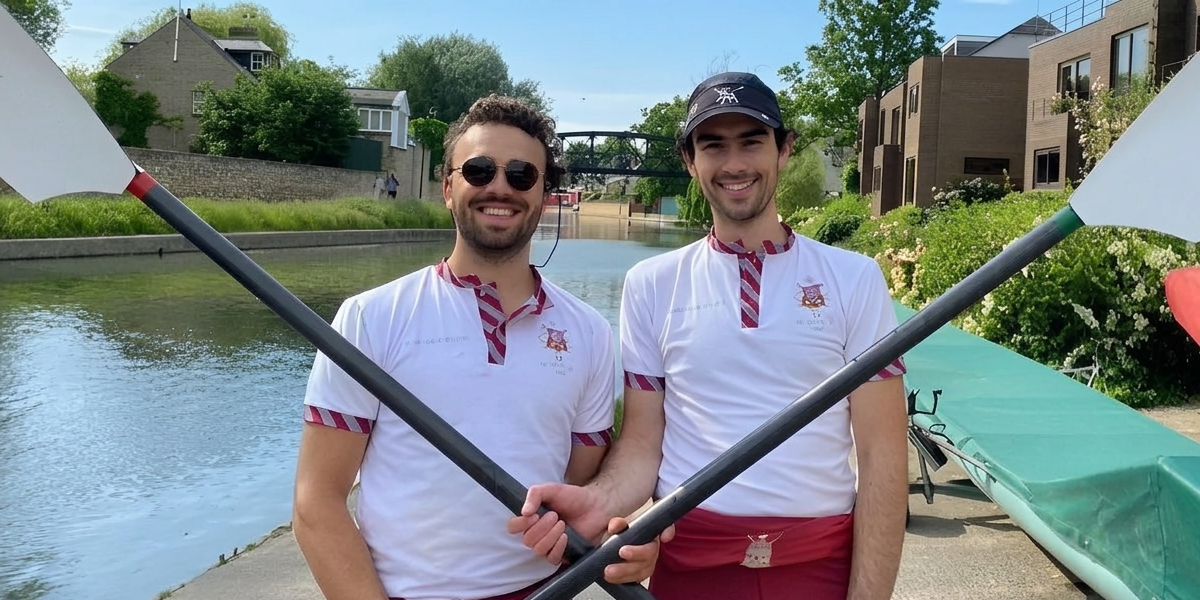 Constantin (left) with Fitzwilliam rowing team mate
Thanks to the Harding Distinguished Postgraduate Scholarship, alumnus Constantin Kilcher (Clare 2020) pursued a PhD that laid the foundations for his successful consulting career at Bain & Company.
Published on:
23 March 2026
It’s such a privilege to be surrounded by people that impress you and who you learn from.
Constantin’s PhD, ‘The Emergence of Eugenics as Science in Zurich, c. 1890’, not only introduced him to new methodologies and experts in the field, but its focus has relevance today.
The Scholarship gave Constantin the funding to make the most of his time at Cambridge, across his studies and extracurriculars, as well as the rare opportunity to contribute to the fledgling Harding community, which has flourished ever since.
A calling to the past
Constantin is a German and Swiss citizen. “I ended up finishing high school in Zurich, Switzerland, where I also did my undergraduate in history, philosophy and economics.”
But when Constantin applied for his PhD, Cambridge was familiar. “I completed my MPhil at Cambridge (Fitzwilliam 2018) in 2019 in modern European history.”
After his MPhil, Constantin worked for the Swiss Embassy in Washington, D.C. as an academic associate. But his passion for history drew him back to academia: “The desire to create a historic work of my own drove me to do a PhD.”
Being funded and feeling valued
Constantin heard about the Harding Distinguished Postgraduate Scholarship through his MPhil supervisor. “David Harding went to St Catharine’s like my MPhil, and later PhD, supervisor, Sir Chris Clark.
"I didn’t know much about the Scholarship as it was the first year, but I had heard about his donation in the news because it was the largest made to a higher education institution.”
The Harding funding not only allowed Constantin to enjoy his time at Cambridge but signalled that his research was valued. “A PhD is not just an intellectually joyful time, but it should feel like you have a job because you’re a researcher and you’re contributing to an institution and knowledge more generally.”
As part of the inaugural cohort, Constantin and his fellow Harding scholars built a community from the ground up. “The first Harding trip provided an amazing opportunity to connect. I remember driving a minibus to get us all to the Lake District!”
Constantin appreciates that this cohesion is led by students and supported by the Programme. “The Scholarship encourages grassroots initiatives by creating opportunities for people to get together and form a community.”
Exploring uncomfortable truths
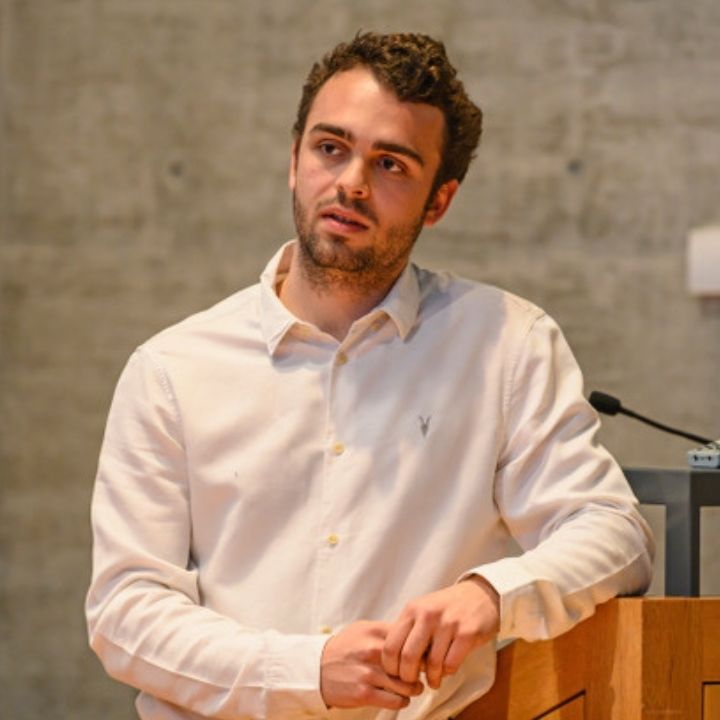
Constantin’s PhD focused on how eugenics became scientific knowledge. “We now see eugenics as scientifically debunked, but many scientists believed in it for a long time, with some influential people believing in it today.
"It felt like a compelling line of enquiry to understand how scientific knowledge is created and what makes people subscribe to particular ideas over others.”
Constantin’s research went beyond academic interest; it was personal: “I am a German Jew, so I wanted to know what made something as destructive as the Holocaust possible.”
Through his studies of eugenics, Constantin drew parallels with today. “When COVID was at its worst, there were remarks by elected officials that here was the moment to weed out the weak and to strengthen the population.
"There’s also a resurgence of ideas around white supremacy and racial superiority in both legislation and language.”
Constantin valued Cambridge’s one-on-one teaching style, providing a space for intensive learning. “The supervisions were moments of intense focus, and I learnt so much from my supervisor, Chris; he’s probably one of the most intelligent people I’ll ever meet!”
More generally, Constantin’s PhD taught him perseverance. “Because of COVID restrictions, the archieves were closed so I had to get special permits, and there were also administrative hurdles to international travel.”
Constantin learnt how to manage his own time to stay motivated, creating a timetable that worked for him. “Deciding what I should be working on day-to-day, week-to-week and by the end of the month definitely made it more achievable.”
Cellos, conversations, and the River Cam
Constantin appreciates Cambridge’s value for extracurriculars. “My College helped to bring my cello over to the UK for me to play, which was really cool.”
“I formed a group with a clarinet player and pianist, and it was really good ! Cambridge is the ideal place to pursue your passions at a high level because everyone is so talented.”
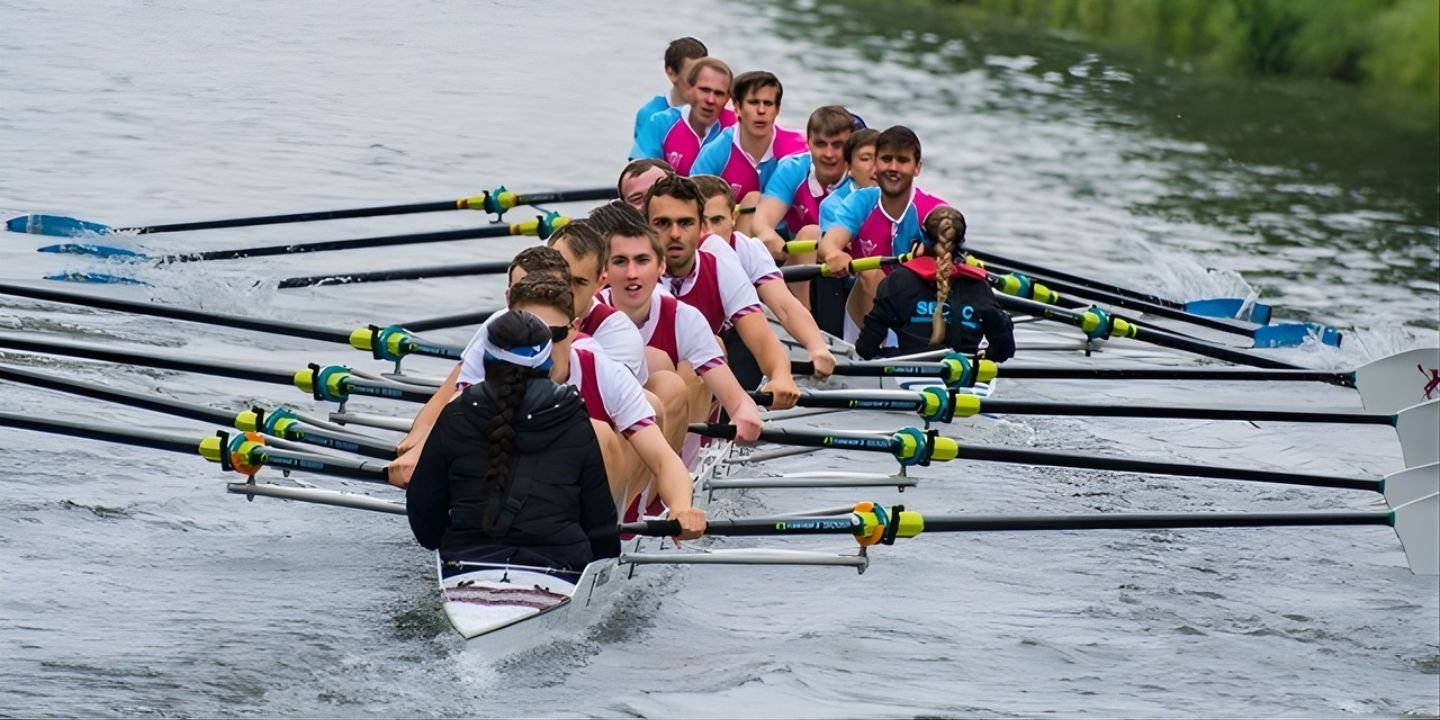
Cambridge also introduced Constantin to the wonderful world of rowing. “Before coming to Cambridge, I wouldn’t have considered myself as sporty, but, whilst doing my MPhil, I ended being part of Fitzwilliam’s first boat and spent hours at the boathouse every week.”
And he’s grateful for the casual dinner conversations that transformed into vibrant discussions about all sorts of topics.
“People were always eager to speak about something they really cared about. There are very few places in the world that attract so many people like that.”
Consultancy: the next chapter
Now, Constantin applies his analytical skills from his PhD as a consultant for Bain & Company. “Both the business world and history are fundamentally about how to tell stories that are grounded in facts.”
Constantin also notes differences between his time at Cambridge and the world of business. “The subject matter and the pace are very different. The business world also likes to avoid complexity, so I have to make the story simple and clear.”
Fundamentally, however, Cambridge has encouraged in Constantin an open mind and eagerness to learn. “I think the most important thing I took from Cambridge was humility. You’re never the smartest in the room at Cambridge. You feel humble yet also rejoice in it.
"It’s such a privilege to be surrounded by people that impress you and who you learn from.”
Related stories
Philanthropic giving is at the heart of the success of the Collegiate University, enabling us to make discoveries that change the world and to ensure that our students receive an unrivalled education. Cambridge owes its world-leading excellence in research and teaching to the generosity of its supporters. Our history is synonymous with a history of far-sighted benefaction, and the same is as true today as it has ever been.



Giving opportunities
Philanthropic giving is at the heart of the success of the Collegiate University, enabling us to make discoveries that change the world and to ensure that our students receive an unrivalled education.