
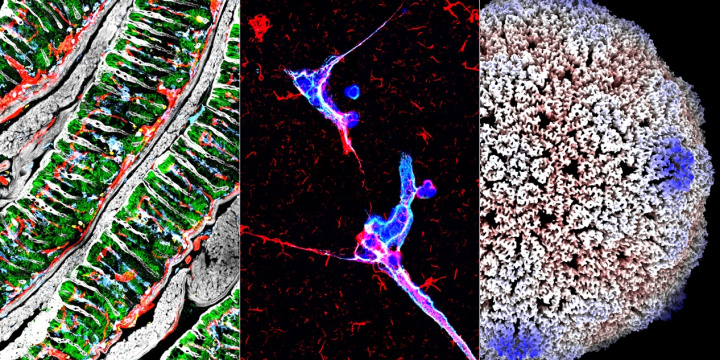
CITIID is tackling two intertwined fronts:
- Immune-mediated diseases: conditions such as inflammatory bowel disease, lupus and vasculitis, which affect nearly 10% of the UK population and are treated today with broadly suppressive therapies that carry serious side-effects.
- Infectious disease and the microbiome: from COVID, HIV and tuberculosis to emerging viral threats and the role of gut microbes in regulating immunity, these remain among the world’s greatest health burdens.
Your support helps accelerate pioneering research that:
- Uncovers how immune system malfunction and how pathogens evade our body defences.
- Translates these discoveries into targeted therapies and better patient outcomes.
- Empowers us to respond more rapidly and effectively to future global health threats.
- Trains the next generation of researchers and clinician-scientists in the field.
Featured projects
Cellular oxygen and metabolism
Professor James Nathan and his team study how cells sense oxygen and nutrients, and how this affects their behaviour. By understanding how these signals control immune cells and other key cell types, they are uncovering why cells sometimes misfire in diseases such as cancer, inflammation and infection. Their work could lead to new therapies for metabolic disorders, enhanced cancer immunotherapy, and better strategies for managing autoimmune diseases.
Gut microbiome and immunotherapy
Dr Virginia Pedicord and her team explore how the trillions of microbes in our intestines affect immune responses and pathogen resistance. Disruption of this relationship is linked to inflammatory bowel disease, infection and cancer. Using in vivo models, cell biology and advanced ‘omics approaches, their research can lead to microbiome-based therapies that combat these conditions and improve the success of treatments such as cancer immunotherapy.
Innate immunity
Professor David Thomas and his lab investigate how the immune system uses tiny chemical signals called reactive oxygen species (ROS) to fight infections and prevent harmful inflammation. His team discovered EROS, a protein essential for immune cells to produce ROS. Research into this area helps to guide new treatments for both innate and adaptive immune deficiencies.
Pandemic preparedness
Dr Suzannah Rihn’s group studies how viruses jump from animals into humans and what allows them to spread widely. Given there have been three coronavirus epidemics or pandemics in the last two decades alone, her team investigates in particular the molecular features that enable coronavirus zoonosis or cross-species transmission. This research lays the groundwork to prevent future outbreaks and protect global health.
Vaccines and viral response
Professor Ravindra Gupta’s group works on how viruses evolve inside the body and how our immune system fights them, focusing especially on HIV, SARS‑CoV‑2 and other high‑risk pathogens. His team has revealed how viral variants emerge in vulnerable individuals, how vaccine responses differ by age and health status, and how rapid diagnostics can help manage outbreaks. By supporting their work, you enable breakthroughs that optimise vaccine strategies and protect people worldwide most at risk when the next viral threat arises.
Relevant stories
- “We’re in it for the long haul”
- Long COVID linked to persistently high levels of inflammatory protein: a potential biomarker and target for treatments | University of Cambridge
- New study shows how gut microbes affect cancer immunotherapy responses | Department of Medicine
- Prioritise vaccine boosters for vulnerable immunocompromised patients, say scientists | University of Cambridge
- New study reveals key enzyme to control cellular energy production and immune function | CITIID
Next steps
Support for ground-breaking research at CITIID can be made online, or you can contact us using the details below to discuss your philanthropic goals:
Make a gift now
Make a gift now to support by credit or debit card, or set up a direct debit:
Give nowAssociate Director, Cambridge University Health Partners
- Harriet Aspin
- harriet.aspin@admin.cam.ac.uk