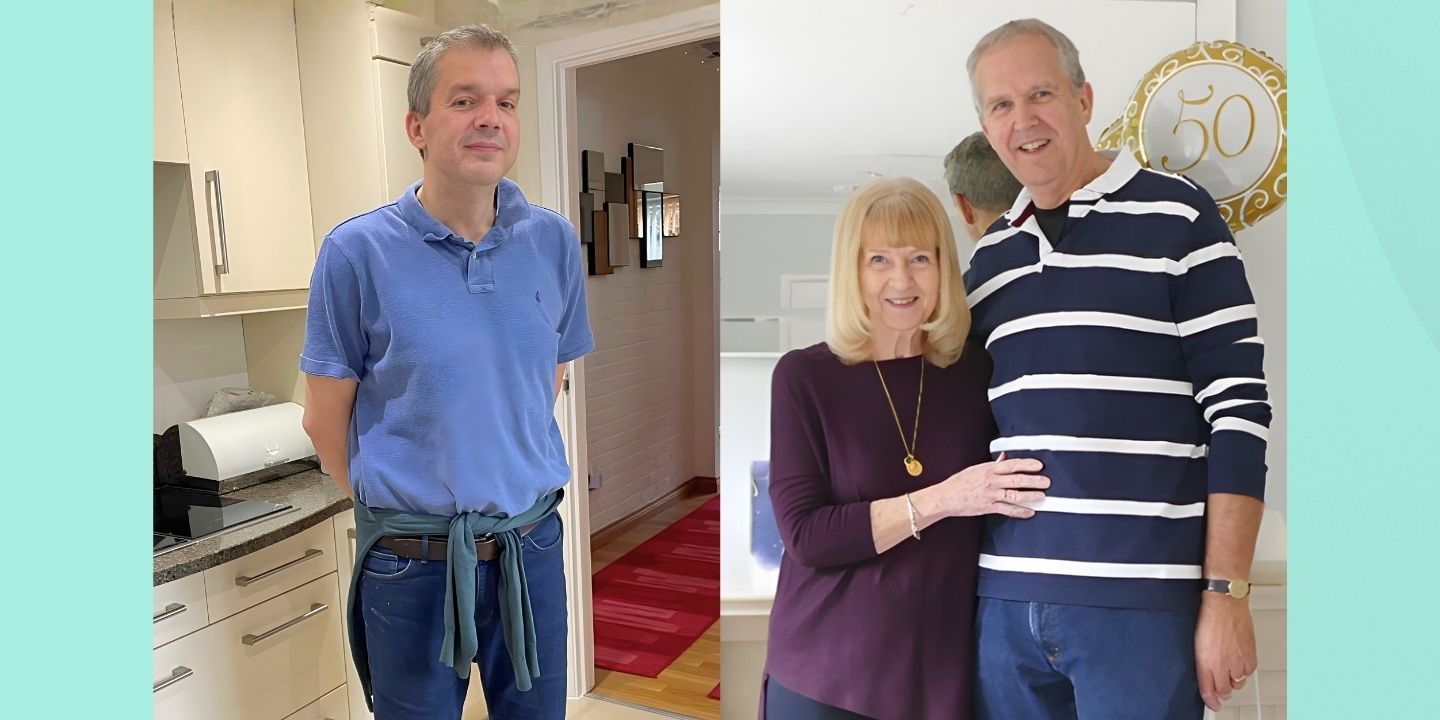
As the first PhD student supported by the gift is named, Nici Platt shares her family’s journey to create meaning and impact out of personal loss.

The Collegiate Cambridge community stretches far and wide, reaching back through history and around the globe. And behind every member lies a personal odyssey and a unique story.
The Platt family is no exception. With neither Cambridge connections nor an established philanthropic history, tragic circumstances led Nici and her husband, Mike, to the University’s Autism Research Centre, and an unexpected and warm relationship with Collegiate Cambridge, people and place. It inspired them to empower positive change by funding two PhD scholarships in the critical field of autism research.
Nici explains: “Our awareness of autism really didn't come fully into play until our son Mike J's diagnosis at the age of 30. This happened gradually because Mike J was very capable; he was working in the City as an assistant director in an insurance company, and he absolutely loved to travel, especially to unusual places. And so, on the outside, everything looked good.
Unfortunately, on the inside, it wasn't. Things began to go downhill when he was in his mid-40s, when both his mental and physical health began to deteriorate. He contracted a very severe case of hyponatremia, or low blood sodium. He recovered from this mentally but not physically; his heart was badly damaged, and he died of a heart attack in April 2024.”
The connection between autism and heart disease is an area of active research. Understanding this relationship is crucial for improving health outcomes and ensuring that individuals with autism receive appropriate medical care to address their unique health challenges.
According to the Autism Research Centre (ARC) in the Department of Psychiatry at the University of Cambridge, “Some autistic people face a greater risk for premature mortality. This is in part due to co-occurring health conditions.... It is also likely due to social barriers in healthcare that autistic people face." The ARC conducts research to identify if autistic people are more at risk of developing certain co-occurring physical health conditions and to evaluate the factors that could improve health outcomes
For the Platt family, upon Mike J’s untimely death, this became a deeply personal question.
Nici says, “We decided that we wanted to use Mike J’s life insurance money to do something positive for the autism community that would benefit right across the board, no matter what age or where on the spectrum people were. I got in touch with Mike J's consultant, Dr Jeremy Broadhead, who had been a student of Professor Sir Simon Baron-Cohen, and he said that Sir Simon is doing some great work in autism and to perhaps start there. We looked up the ARC and really liked what we saw and how it aligned with our own goals. That’s how the story of our gift began.”
Early in 2025, Nici and Mike senior visited Trinity College to meet with Trinity Fellow Sir Simon. “Mike and I didn't go to university. We are 1950s babies; Mike just wanted to get out into the world and start earning, and it was never, ever dreamed that I would go to uni. So visiting Cambridge was an amazing experience. We both stood in the Porter's Lodge just wondering what on earth was happening!
We met Sir Simon, and the atmosphere was one of such acceptance and understanding. He presented the selection of ARC projects for autism research, and when he mentioned the need to explore the relationship between autism and heart disease, it seemed the perfect fit and just what we were looking for. Not only are we a very neurodiverse family generally, but around the time that Mike J sadly died, my husband, who is also on the autistic spectrum, was diagnosed with heart issues. So, it was something that felt really important to us.
“The sub-librarian, Steven Archer, then took us on a tour of the College Library and showed us a number of first editions. It was delightful and so memorable. I will never forget it. I feel so fortunate to have experienced something so special.”
As a very personal touch, the Platts were even shown the accounts book used by Isaac Newton, as some believe Newton to have been autistic.
Now, Omar al-Rubaie has been named as the first beneficiary of the Platts’ gift to establish PhD scholarships in autism research, working under Professor Baron-Cohen in the ARC.
Omar takes up the story: “Initially, I came to the ARC on an intercalated master's degree, researching autism and cardiovascular health. The preliminary results are showing that autism is associated with an increased risk of heart attacks and strokes. We're just finalising the results for publication. The findings are very important, and there are a lot more questions to answer. I investigated transferring into the PhD (which, when combined with medicine, is called MB/PhD) to continue doing research in the area. Then almost by providence, this gift arrived at exactly the right moment.”
Omar al-Rubaie (Fitzwilliam 2024)
What does it mean to Omar to have this funding?
“It's made this research possible. This takes a lot of time: it's data analysis and management; it takes months to do. The Platts’ funding gives me the time to not only get the initial paper finished but also to start more in-depth research into the mechanism behind anything we might be observing that could help us understand the causes of autistic people’s increased risk of cardiovascular disease. That's the vital next stage of research, and we hope to use the outcomes to inform clinicians and help improve support and care for autistic patients.”
In his view, is Cambridge the best place for this research?
“Certainly, in the UK and probably internationally, because Cambridge has an excellent autism research centre, fantastic scientists, and the Victor Phillip Dahdaleh Heart and Lung Research Institute in the Royal Papworth Hospital as the leading cardiovascular research centre. It's got the expertise for all the domains I need within a 10-mile radius. I'm interested in cardiovascular medicine as a career, so once I finish the PhD, it's 2-3 years of clinical medicine and then working as a doctor, but keeping my autism research progressing.”
The second PhD scholarship, which will research the links between autism and addiction, is currently being advertised.
This valuable work in autism research is ensuring Mike J is being commemorated in a way that will meaningfully impact autistic individuals for many years to come.
Professor Baron-Cohen, Director of the ARC, added: “The Platt family’s support of PhD scholarships at the ARC will provide vital resources to help enable the innovations that advance discoveries in this field. We are indebted to their generosity, and it is a privilege to honour Mike J’s life in this way and learn from the research to avert future preventable deaths”.
As wider society grows in understanding of neurodiversity, Nici and Mike are immensely hopeful of positive breakthroughs in the approach to autism and how to best support people with the condition.
As Nici concludes: “I have a real desire to raise the profile of autism. There's a lot of neurodiversity in the world, and yet society has not quite got around to learning how to accommodate that.
“Mike J was a lovely, generous, kind, and thoughtful person who was not at all keen to be the centre of attention. But that didn't mean he avoided the challenges he was facing. He would have wanted us to make this gift in precisely this way, and that's become a passion for me as well; I would love to do more. It happened because I know Mike J would have wanted it to happen. He would want to help because that's who he was.”
Support autism research at Cambridge
If you are interested in supporting autism research or other research into the brain and mind, please contact:
Head of Development, Brain and Mind Health
- Belen Tejada-Romero
- belen.tejadaromero@admin.cam.ac.uk